
 Fast Shipping to most US states! & Local delivery within 250 miles
 phone support
Pinball has always lived somewhere between engineering, theater, graphic design, and play. In Workers' Playtime, Canadian artist Mitchell F. Chan pulls those parts apart and rebuilds them as interactive contemporary art.
Presented at DE SARTHE Hong Kong from October 10 through 11/21/2026, the exhibition uses working electromechanical pinball components and custom videogame systems to ask who is really in control when work is made to feel like a game.
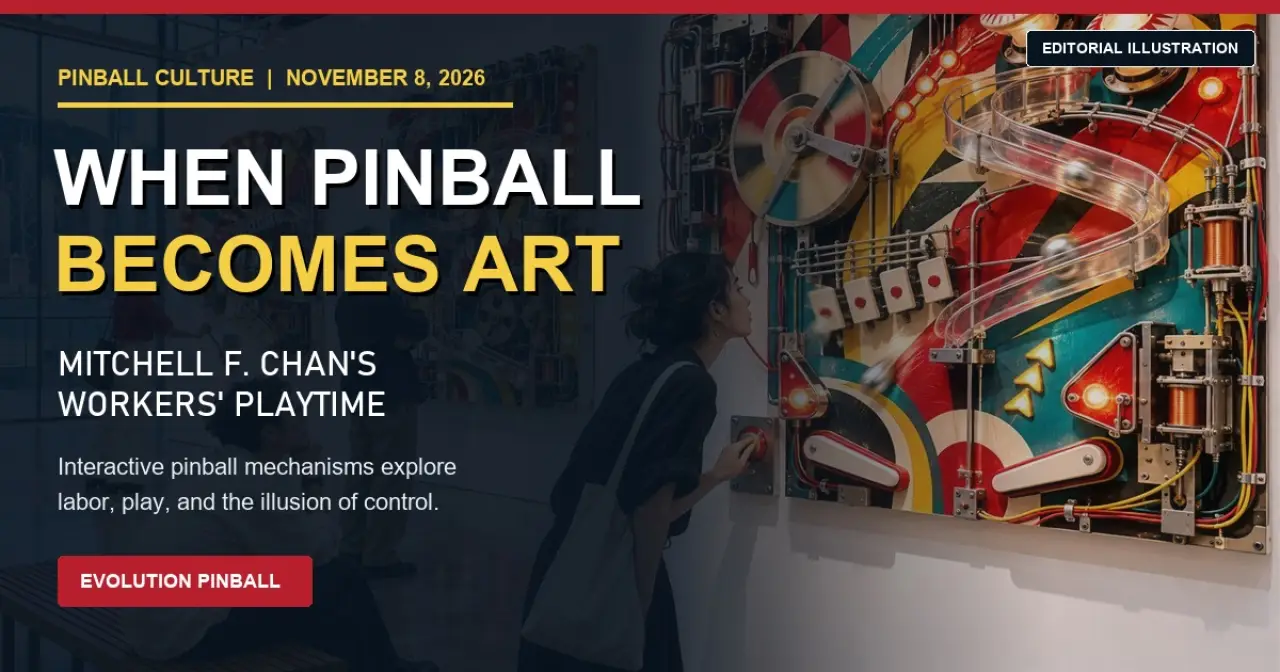
Six playable systems, one uneasy question
DE SARTHE describes Workers' Playtime as Chan's first solo exhibition in Asia. The show brings together six interactive sculptures built from electromechanical pinball parts, custom software, and game-like feedback loops.
These are not conventional commercial pinball cabinets. The mechanisms are deliberately reconfigured into wall-mounted systems whose rules, rewards, and frustrations become part of the artwork.
The result uses the familiar language of ramps, lights, switches, targets, scores, and repeated attempts to examine gamified labor and the illusion of control.
What makes the exhibition notable
Physical mechanisms
Working electromechanical pinball parts make the sculptures tactile, noisy, and responsive rather than purely screen-based.
Custom game systems
Digital logic and videogame pipelines shape how each interaction responds, rewards, or resists the visitor.
Rules as material
The show treats scores, tasks, repetition, and engineered difficulty as artistic materials alongside metal, lights, and switches.
A Hong Kong debut
Workers' Playtime is presented as Chan's first solo exhibition in Asia at DE SARTHE Hong Kong.
Pinball beyond the arcade
The exhibition shows how pinball's design language can support cultural criticism as well as entertainment.
From Cliffhangers to Roundtrippin'
The exhibition includes works titled Cliffhangers, Daddy's Home, and Roundtrippin', along with a central videogame component. Each piece uses a different arrangement of play, instruction, chance, and obstruction.
That obstruction matters. The mechanisms are intentionally shaped to complicate the player's sense of agency, making the desire to improve or win part of the work's argument about productivity and control.
For pinball fans, the show offers a useful reminder that rules and feedback are as important to a machine's identity as cabinet art or a licensed theme. Change the reward structure and the same familiar hardware can tell a very different story.
Why this matters to pinball collectors
Workers' Playtime is an art exhibition, not a newly announced pinball machine, and Evolution Pinball is not selling the works. Its value for collectors is the perspective it brings to the medium: pinball hardware can communicate ideas before a single traditional mode or multiball begins.
It also highlights the craft hidden inside every machine. Solenoids, switches, lamps, ramps, software, sound, and scoring logic are not isolated features; together they shape how a player feels effort, anticipation, fairness, and reward.
Collectors comparing modern machines can use that same lens. The most memorable games do more than assemble mechanisms: they make every rule, shot, light, and sound contribute to a coherent experience.
Frequently Asked Questions
Is Workers' Playtime a new pinball machine?
No. It is a contemporary art exhibition of six interactive sculptures and a custom videogame system that use pinball mechanisms and game design.
Where and when is the exhibition?
DE SARTHE lists Workers' Playtime at its Hong Kong gallery from October 10 through 11/21/2026.
Can visitors interact with the works?
Yes. The gallery and contemporary reporting describe the sculptures as interactive, with working pinball components and custom digital systems.
Is Evolution Pinball selling these artworks?
No. Evolution Pinball is covering the exhibition as pinball culture and design news, not offering the artworks or representing the artist or gallery.
Keep Exploring Pinball
Compare current machines, manufacturer information, videos, artwork, and buyer resources from Evolution Pinball.